
 Email: sales@slxytech.com
 WhatsApp / Wechat:8617062388866
 Phone:+86 17062388866
Description
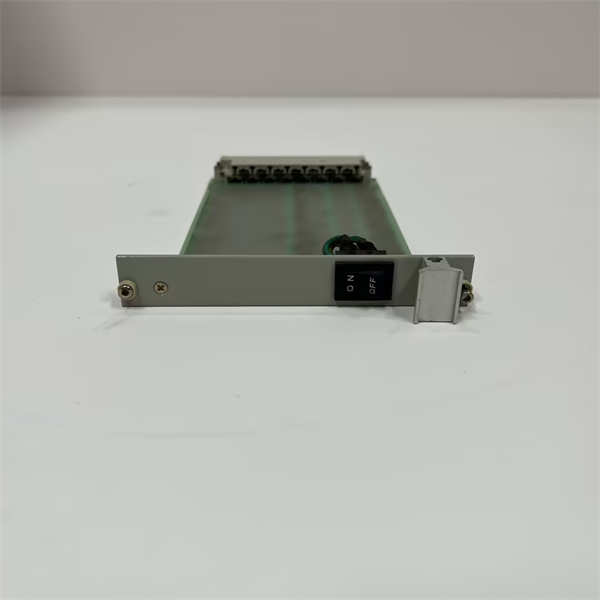
The GE WEA13-13 (2508-21001) is likely a specialized Auxiliary Relay or Interface Module, typically found within GE’s comprehensive range of industrial control and protection systems, such as those used in power generation, distribution, or heavy industrial processes. This module would serve to provide discrete signal interfacing, logic integration, or specialized control functions within a larger GE control panel or rack. The “WEA” prefix often indicates a component related to protective relays or control logic in GE’s product lines.
Application Scenarios:
Imagine a crucial pump station in a municipal water treatment facility. This station relies on robust control to ensure continuous water flow and prevent overflow or dry-run conditions. The main control system is a GE-based PLC or DCS, but there’s a need to integrate legacy alarm systems, specific motor control interlocks, or perhaps even specialized sensor feedback that requires unique signal conditioning or contact multiplication. Relying on the main controller for every minor logic function could consume valuable processing power or I/O points.
Here, the GE WEA13-13 (2508-21001) would prove invaluable. As an auxiliary relay or interface module, it could manage specific, localized logic functions such as:
Motor Control Interlocks:Ensuring that a cooling fan starts only when the main pump motor is running and conditions are safe.
Alarm Repeater:Taking a single alarm contact from a legacy sensor and multiplying it to trigger multiple annunciators, SCADA inputs, and local indicators.
Signal Isolation/Conversion:Providing electrical isolation between different voltage levels or converting specific signal types for compatibility with the main control system.
The WEA13-13 (2508-21001) would free up critical I/O points on the main PLC/DCS, simplify wiring, and enhance the robustness of specific safety or operational interlocks, ensuring that local control functions are executed reliably even in the event of minor issues with the broader network. This leads to increased operational safety, reduced troubleshooting time for complex interlocks, and improved overall system reliability.
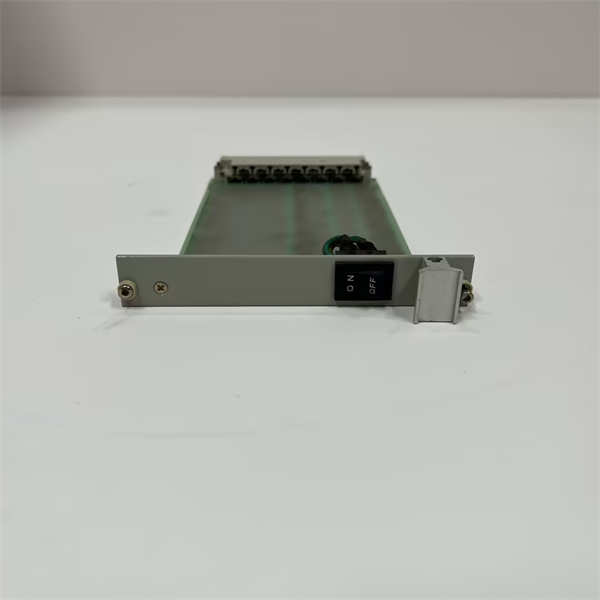
GE WEA13-13 2508-21001
Parameter:
Given the limited public information, the following parameters are speculative but consistent with typical GE industrial auxiliary modules:
| Main Parameters Value/Description |
| Product Model: WEA13-13 |
| Manufacturer: General Electric (GE) |
| Product Category: Auxiliary Relay / Interface Module / Signal Conditioner (Speculative) |
| Ordering/Part Number: 2508-21001 |
| Functionality: Discrete I/O Relay, Logic Interfacing, Signal Isolation (Speculative) |
| Input Voltage Range: 24 VDC / 48 VDC / 125 VDC / 240 VAC (Typical options) |
| Output Type: Dry Contact Relays (e.g., SPDT, DPDT) or Solid-State Output (Speculative) |
| Number of Contacts/Channels: 2 to 4 (Speculative) |
| Operating Temperature: -20°C to +70°C (Typical for industrial grade) |
| Mounting Method: DIN Rail Mount or Panel Mount (Speculative) |
| Connection Type: Screw Terminals |
| Protection: Fused Inputs/Outputs (Speculative) |
| Reliability: High-reliability industrial component |
| Form Factor: Compact, modular unit for control panels |
Technical Principles and Innovative Values:
Based on the assumed function, the GE WEA13-13 (2508-21001) would embody principles of robust electrical interfacing and reliable signal handling.
Innovation Point 1: Robust and Reliable Discrete Signal Replication/Interfacing: The core value lies in its ability to reliably take a single input signal and either repeat it for multiple destinations, isolate it electrically, or convert its characteristics (e.g., voltage level). This is crucial in complex industrial systems where a single sensor state might need to trigger multiple alarms, control different actuators, or communicate with various subsystems without direct hard-wiring to the main PLC/DCS, thus simplifying wiring, reducing noise, and protecting sensitive control cards.
Innovation Point 2: Flexible Configuration for Diverse Applications: Modules like the WEA13-13 (2508-21001)often feature internal jumpers or simple DIP switch settings that allow for various operational modes – e.g., normally open/normally closed contacts, selectable input voltage ranges, or timing functions (if it includes basic logic). This adaptability minimizes the need for multiple specialized modules, reducing spare parts inventory and simplifying system design and maintenance across different applications.
Innovation Point 3: Enhanced Safety and Isolation: If the module provides electrical isolation (e.g., via opto-couplers or isolation transformers), it significantly enhances system safety and reliability. By isolating control circuits from field wiring, it protects sensitive electronics from voltage surges, ground loops, or noise, which are common in industrial environments. This ensures that a fault in one part of the system does not propagate to critical control components, leading to increased uptime and reduced risk of equipment damage.
Application Cases and Industry Value:
In a large steel mill, the rolling process involves numerous motors and safety interlocks. Traditionally, each interlock might directly wire back to a central PLC. However, with thousands of sensors and actuators, wiring becomes incredibly complex, and troubleshooting a single faulty wire or relay is time-consuming.
The mill integrated auxiliary modules like the GE WEA13-13 (2508-21001) into distributed control panels near specific process areas. For instance, in the motor control centers (MCCs), the WEA13-13 (2508-21001) could take the “motor running” signal from the MCC and provide isolated outputs to the main DCS, a local HMI, and a separate safety interlock system. This reduced the number of long cable runs, simplified the PLC I/O configuration, and made local troubleshooting much faster. If a local interlock needed modification, it could be done at the panel level via the auxiliary module, without affecting the core PLC program. This led to:
Reduced Wiring Complexity: Less point-to-point wiring to the central control room.
Faster Troubleshooting: Localized problem identification and resolution.
Improved Safety and Reliability: Enhanced electrical isolation and simplified interlock management.
These benefits directly translated into reduced maintenance costs, improved operational uptime, and enhanced safety for personnel working near the heavy machinery.
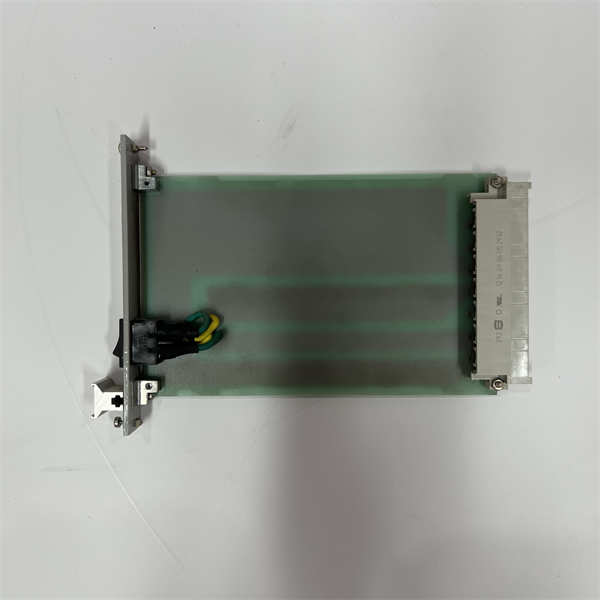
GE WEA13-13 2508-21001
Related Product Combination Solutions:
As a specialized auxiliary module, the GE WEA13-13 (2508-21001) would typically be integrated within larger GE control systems. Consider combining it with:
GE VersaMax PLC Series: Modules like the IC200CPU001-GE(CPU) and IC200MDL640 (digital input/output modules), where the WEA13-13 (2508-21001) could extend or condition signals from field devices.
GE Rx3i PAC Systems: High-performance Programmable Automation Controllers, such as the IC695CPU310, where the WEA13-13 (2508-21001)could manage specific interlocks or auxiliary functions at the edge.
GE Mark VIe Turbine Control System: In specialized turbine applications, the WEA13-13 (2508-21001)might act as a signal conditioner or relay for non-critical (but important) control signals that interface with the core turbine control I/O modules (e.g., IS220PPROH1A).
GE Multilin Protection Relays: Such as the F60or D400, where the WEA13-13 (2508-21001) could serve as an auxiliary relay to extend trip contacts or alarm indications to other systems.
GE Control Panels and Enclosures: The physical housing where the WEA13-13 (2508-21001)would be mounted alongside other control components.
Industrial Sensors and Actuators: The field devices (e.g., limit switches, solenoids, small motors) that the WEA13-13 (2508-21001)directly interfaces with.
GE HMI/SCADA Systems: Software platforms (e.g., iFIX, Cimplicity) that receive status signals or issue commands facilitated by the WEA13-13 (2508-21001)‘s outputs.
Installation, Maintenance, and Full-Cycle Support:
The GE WEA13-13 (2508-21001), as an auxiliary module, is designed for straightforward installation and minimal maintenance, typical of robust industrial components. Installation would involve mounting the module securely within a control cabinet, likely on a DIN rail, and then connecting field wiring to its clearly labeled screw terminals. Given its assumed function, configuration would be minimal, possibly involving jumper settings for input/output behavior or simple wiring changes to adapt to specific needs. Its robust design is inherently adaptable to the electrical and environmental conditions commonly found within industrial control panels, ensuring consistent performance.
Routine maintenance for the WEA13-13 (2508-21001) would be limited to periodic visual inspections of its connections and ensuring the control cabinet’s environmental integrity (e.g., dust and temperature control). As a solid-state or electromechanical relay-based component, it typically requires no calibration or active servicing. Its reliability reduces the need for frequent intervention. In the rare event of a failure, its modular nature allows for quick replacement, minimizing downtime for the specific control loop or function it supports.
GE (through its various industrial divisions, including GE Vernova) provides full-cycle support for its industrial control products. This support typically includes access to relevant technical documentation, engineering guidelines for integration, and a network of technical support professionals. While specific lifecycle support for highly specialized or older part numbers might vary, GE generally aims to provide repair services and access to replacement units (or functionally equivalent alternatives) to ensure the long-term operational continuity of systems utilizing their components.