
 Email: sales@slxytech.com
 WhatsApp / Wechat:8617062388866
 Phone:+86 17062388866
Description
| Product Model | 42011-106-00 A01 VER.A01 |
| Manufacturer | ALSTOM (GE Steam Power legacy product) |
| Product Category | I/O Communication Module (VIOM/VIOC) |
| Compatible System | Speedtronic Mark IV Turbine Control |
| Primary Function | Vibration I/O Interface & Controller Communication |
| Input Channels | 8 analog inputs (configurable for vibration/process signals) |
| Signal Types | 4–20mA, ±1V to ±10V, IEPE accelerometers |
| Communication Ports | RS-485 Modbus, TTL backplane, Dedicated vibration bus |
| Isolation | 1500V AC channel-to-ground |
| Sampling Rate | 10 kS/s per channel (vibration mode) |
| Power Requirement | +5V DC @ 1.2A, +15V DC @ 0.5A (backplane) |
| Operating Temperature | -20°C to +65°C (-4°F to +149°F) |
| Certifications | UL 508, ATEX Cat 3 (Zone 2) |
Product Introduction
The ALSTOM 42011-106-00 A01 VER.A01 is a critical vibration I/O and communication interface module for legacy Speedtronic™ Mark IV turbine control systems. Functioning as a VIOM/VIOC (Vibration I/O Module/Controller), it bridges vibration sensors and process instruments with the turbine protection logic. This specialized board conditions signals from accelerometers, proximity probes, and process transmitters while executing real-time data preprocessing.
Designed for high-reliability operation in power generation environments, the 42011-106-00 A01 VER.A01 converts raw sensor data into standardized formats for the TREG controller and external monitoring systems. Its dual-role architecture supports both direct vibration protection trips (via hardware comparators) and continuous condition monitoring data streaming. As a key component in ALSTOM’s machinery health ecosystem, this module enables early detection of bearing defects, rotor imbalances, and aerodynamic instabilities in gas/steam turbines. Version A01 features enhanced EMI hardening over earlier iterations, crucial for surviving electrical noise near turbine generators.
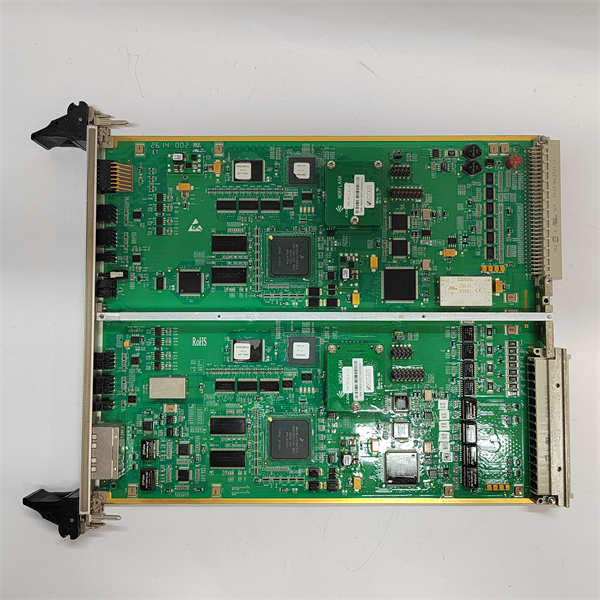
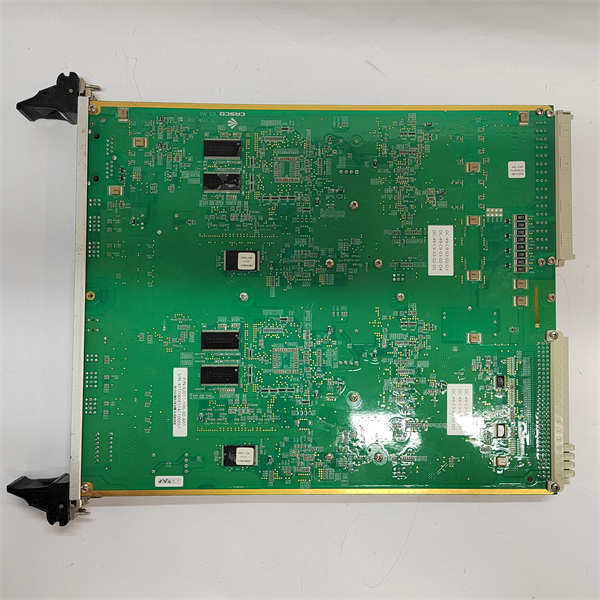
ALSTOM 42011-106-00 A01 ITC_VIOM_VIOC VER.A01
Core Advantages and Technical Highlights
Multi-protocol integration: The ALSTOM 42011-106-00 A01 VER.A01 uniquely consolidates vibration, process, and communication functions. Its RS-485 port streams spectral data to System 1™ analytics while simultaneously transmitting trip signals via hardwired TTL logic to the turbine protection system.
Advanced signal conditioning: Incorporates programmable gain instrumentation amplifiers (PGIA) with 16-bit resolution. Automatic sensor validation detects open-circuit/wire-break conditions on IEPE accelerometers. Switchable AC/DC coupling isolates vibration components from slow-varying process signals.
Redundant safety architecture: Implements dual-path processing where raw vibration signals bypass digital circuits for direct hardware comparison against adjustable trip setpoints. This failsafe design ensures shutdown reliability even during processor faults.
Legacy interoperability: Maintains pin-compatibility with Mark IV VTCC racks and interfaces seamlessly with
Typical Application Scenarios
Gas turbine protection: In 50-250MW turbines, the 42011-106-00 A01 VER.A01 processes signals from combustor dynamics pressure sensors (high-frequency AC mode) and bearing accelerometers (0.5–10kHz range). Its hardware comparators trigger turbine rundown within 50ms upon detecting flame instability.
Steam turbine supervisory systems: For 3600 RPM turbines, the module monitors shaft eccentricity during startup (low-speed DC mode) and switches to vibration monitoring at operating speed. Integration with speed/phase cards enables order-tracking analysis for blade resonance detection.
Auxiliary equipment monitoring: In critical boiler feed pumps, the board’s spare channels track motor current signatures correlated with vibration data to identify cavitation or misalignment.
Retrofit installations: Serves as communication gateway when modernizing legacy Mark IV systems, converting vibration data to Modbus TCP for integration with plant DCS.
Related Model Recommendations
42011-106-00 VER.00: Initial release without ATEX certification
TVQB-1: Quad-bearing vibration monitor (direct interface partner)
TREG-3: Turbine regulator controller (core processor)
TDZE-2: Proximitor power supply module
TK3-2E: Vibration signal termination board
IS200VPROH1A: GE Mark VIe equivalent vibration processor
TVIB-2: Successor module for Mark V systems
42009-400-01: Relay output module for trip execution
DS200DCFBG1B: Redundant power supply unit
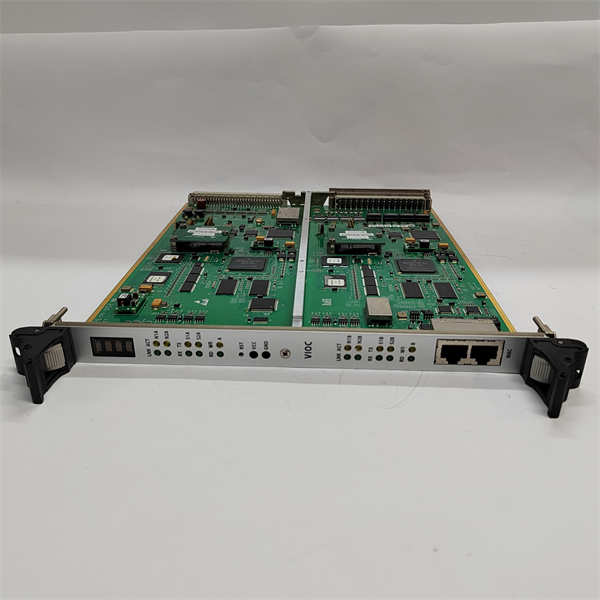
ALSTOM 42011-106-00 A01 ITC_VIOM_VIOC VER.A01
Installation, Commissioning and Maintenance Instructions
Installation preparation: De-energize the VTCC rack and verify discharge of capacitors (>5 minutes). Ensure rack grounding resistance <0>42011-106-00 A01 VER.A01 using ESD-safe procedures – wrist strap mandatory. Verify backplane pin alignment (Type C DIN 41612 connector). Pre-terminate sensor cables with MIL-C-5015 connectors.
Commissioning procedure: Set DIP switches SW1-SW4 for input type (IEPE/voltage/current). Configure jumper J7 for Modbus termination. Use ALSPA® software to assign channels to trip functions (Group A) or monitoring (Group B). Perform sensor simulation tests at 80%/100%/110% trip setpoints.
Maintenance suggestions: Quarterly verification of terminal torque (0.7 N·m). Annually clean backplane contacts with Stabilant 22. Monitor built-in “Signal Health” LED status. Replace cooling fans every 5 years (P/N FAN-42011-01). Maintain vibration calibration records per ISO 17025. For module replacement, clone EEPROM configuration using PCMCIA transfer tool AL-EEPROM-CLONER.