
 Email: sales@slxytech.com
 WhatsApp / Wechat:8617062388866
 Phone:+86 17062388866
Description
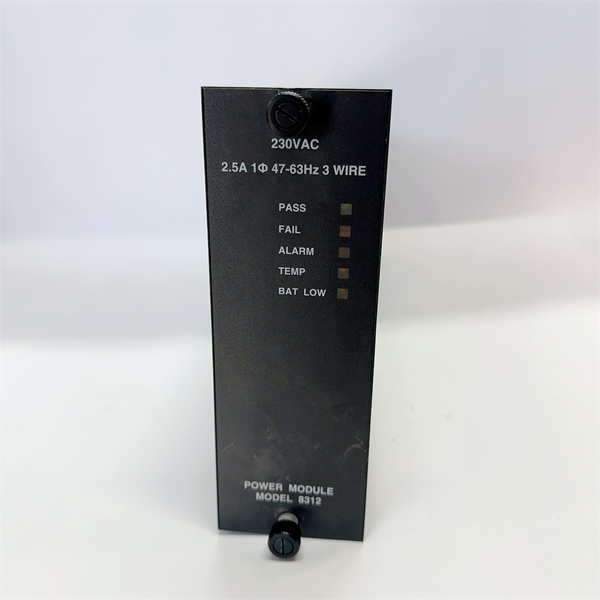
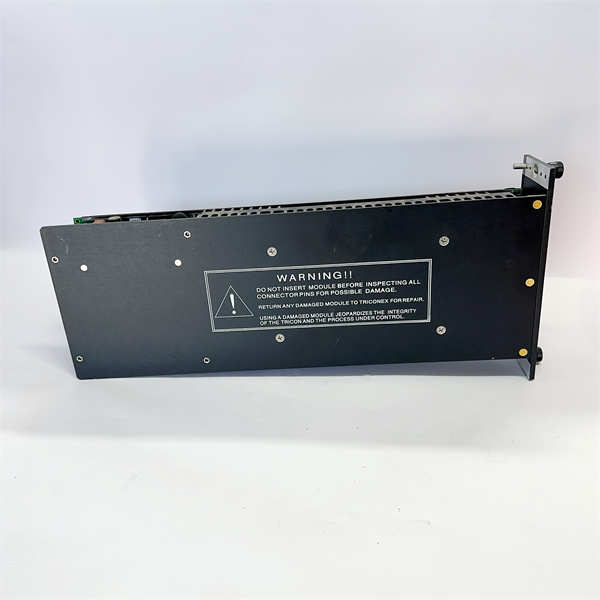
The TRICONEX 8312 is a high-availability Communication Module designed for Triconex’s Safety Instrumented System (SIS) platforms, including the Tricon v9 through v11 series. As a critical component in mission-critical safety systems, this module establishes secure, deterministic communication between the TMR (Triple Modular Redundant) safety controller and external systems such as DCS, SCADA, or plant information networks. The TRICONEX 8312 supports industry-standard protocols including Modbus TCP/IP and OPC, enabling real-time data exchange for process variables, diagnostics, and event sequencing while maintaining SIL 3 certification per IEC 61508 standards.
Engineered with the same fault-tolerant architecture as the main processor, the TRICONEX 8312 features triple-channel redundancy where three independent communication paths operate in parallel. A hardware voter compares outputs to ensure data integrity before transmission, automatically isolating faulty channels without impacting system operation. Its hot-swappable design allows replacement during live operations – critical for continuous processes in refineries or power plants where downtime is unacceptable. The module operates reliably across extreme temperatures (-40°C to +70°C) and withstands severe EMI/RFI interference, making the TRICONEX 8312 indispensable for safety-critical communication bridging in hazardous environments.
TRICONEX 8312
Technical Specifications
| Parameter Name | Parameter Value |
| Product Model | 8312 |
| Manufacturer | TRICONEX |
| Product Type | Safety Communication Module |
| Redundancy | Triple Modular Redundant (TMR) |
| Communication Protocols | Modbus TCP/IP, OPC DA/HA |
| Data Update Rate | 100 ms (typical) |
| Safety Certification | SIL 3 (IEC 61508) |
| Operating Temperature | -40°C to +70°C |
| Power Supply | 5V DC (from chassis backplane) |
| Power Consumption | 4W (typical) |
| Isolation | 1500V AC (field-to-system) |
| Connection Interfaces | 2x RJ45 Ethernet (10/100Base-T) |
| MTBF | >150,000 hours |
| Dimensions | 45 x 195 x 165 mm (HxWxD) |
| Weight | 0.8 kg |
Main Features and Advantages
The TRICONEX 8312 delivers uncompromised safety through continuous channel monitoring: Any discrepancy between the three communication processors triggers automatic diagnostics and fault reporting to the main controller. Its protocol translation capability allows seamless integration with legacy DCS systems while maintaining SIL 3 compliance – eliminating the need for additional gateways. The module features configurable data mapping, enabling selective publishing of safety system tags to external networks without exposing critical logic.
Cybersecurity is hardened with IP address filtering, unidirectional data flow options (read-only mode), and physical write-protect jumpers. For operational efficiency, the TRICONEX 8312 supports simultaneous connections to multiple clients (up to 32 Modbus TCP sessions) with prioritized safety messaging. Hot-swap capability reduces mean time to repair (MTTR) to under five minutes, as modules can be replaced without tools or system shutdown. These features make the 8312 a cornerstone for transparent yet secure safety system integration.
Application Field
The TRICONEX 8312 is deployed where safety systems require deterministic communication with control networks. In oil and gas, it connects Tricon ESD (Emergency Shutdown) systems to distributed control systems (DCS) for real-time valve status monitoring in offshore platforms. Chemical plants utilize it to integrate fire and gas detection systems with plant-wide SCADA, enabling centralized alarm management. Power generation facilities rely on the TRICONEX 8312 to synchronize turbine trip data with balance-of-plant control systems.
Pharmaceutical manufacturers leverage its OPC interface for batch reporting compliance with FDA 21 CFR Part 11. In LNG terminals, the module bridges cryogenic safety interlocks to asset management software for predictive maintenance. The TRICONEX 8312‘s rugged design suits mining ventilation control and metallurgical process safety – wherever SIL-rated communication must survive extreme environments while preventing common-cause failures.
Related Products
TRICONEX 8311: Legacy communication module (pre-v9 systems)
TRICONEX 3706A: Main processor module for TMR voting
TRICONEX 3503E: Analog input module for sensor integration
TRICONEX 4351B: Digital output module for actuator control
TRICONEX 9662-810: Power supply module
TRICONEX MP3008: Modbus Plus communication interface
TRICONEX 8313: Advanced comm module with serial protocols
TRICONEX TriStation 1131: Engineering software for configuration
TRICONEX 8312
Installation and Maintenance
Pre-installation preparation: Verify Tricon chassis compatibility (v9/v10/v11) and slot availability. Configure IP addresses and data mapping in TriStation 1131 software before hardware installation. Ensure ESD protection during handling and confirm firmware version matches controller requirements.
Maintenance recommendations: Monitor channel health via %CHANNEL_DIAG system variable. Replace modules showing persistent “voter mismatch” alarms. Use TRICONEX-approved firmware updates only – never during online operations. Clean card-edge connectors annually with isopropyl alcohol. For hot-swap replacement: Insert replacement module firmly into slot, wait for LED status stabilization (green RUN light), then remove faulty unit.