
 Email: sales@slxytech.com
 WhatsApp / Wechat:8617062388866
 Phone:+86 17062388866
Description
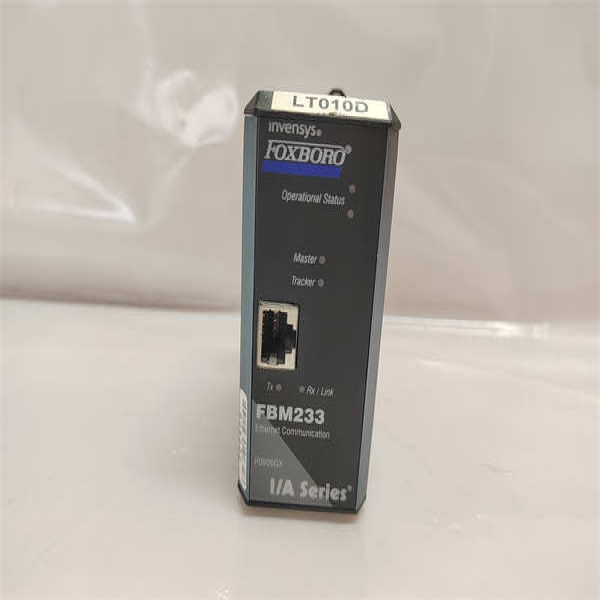
The FOXBORO FBM233 is a critical 4-channel Foundation Fieldbus H1 Interface Module within Schneider Electric’s Foxboro I/A Series distributed control system (DCS). Designed as a Fieldbus Communication Module (FCM), it provides robust connectivity between the DCS controllers and smart field devices using the IEC 61158-2 standard. The FBM233 acts as a vital link in modern process automation architectures, enabling bidirectional digital communication for real-time control, advanced diagnostics, and device parameter management. As part of the FBM200 series, it integrates seamlessly with Foxboro CP60/CP70 series control processors, functioning as a H1 card that hosts up to 16 fieldbus devices per segment. Its primary value lies in reducing wiring costs, enhancing data granularity, and supporting predictive maintenance strategies through comprehensive device diagnostics. The FOXBORO FBM233 is engineered for mission-critical applications in continuous process industries, offering deterministic performance and seamless integration with Foxboro’s Control Core services. Implementing the FBM233 future-proofs control systems by leveraging open standards while maintaining Foxboro’s legacy of reliability.
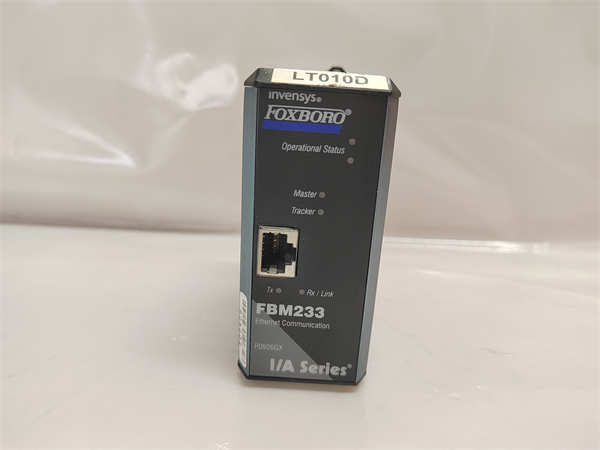
FOXBORO FBM233
Technical Specifications
| Parameter Name | Parameter Value |
| Product Model | FOXBORO FBM233 |
| Manufacturer | Foxboro (Schneider Electric) |
| Product Type | Foundation Fieldbus H1 Interface Module |
| Number of Channels | 4 independent H1 segments |
| Protocol Standard | Foundation Fieldbus H1 (31.25 kbps) per IEC 61158-2 |
| Max Devices per Segment | 16 (with bus-powered devices) |
| Isolation | 1500 VAC channel-to-channel and channel-to-system |
| Power Supply | 24 VDC nominal (from FBM backplane) |
| Redundancy Support | Hot-standby module redundancy (requires paired FBM233 modules) |
| Terminals | Removable screw terminals (16-22 AWG) |
| Communication | Via Foxboro FCM bus to CP controller |
| Operating Temperature | -40°C to +70°C (-40°F to 158°F) |
| Relative Humidity | 5% to 95% non-condensing |
| Certifications | ATEX, IECEx, FM, CSA Class I Div 2 |
| MTBF | > 300,000 hours |
Main Features and Advantages
Deterministic Fieldbus Control: The FOXBORO FBM233 operates as a Link Active Scheduler (LAS), providing precise cycle times down to 250ms for critical control loops. Its dedicated processors manage communication scheduling independently, ensuring jitter-free execution even during host system maintenance.
Enhanced Diagnostics and Safety: Each channel continuously monitors segment health, detecting shorts, opens, and signal quality issues. The module provides live FF device status (including transducer blocks) to the control system, enabling predictive maintenance. Intrinsic safety barriers can be integrated for hazardous area deployments (Zone 1/Div 1 with approved isolators).
Seamless System Integration: The FBM233 auto-discovers field devices and populates the Foxboro Control Core database, simplifying engineering. It supports Device Description (DD) and Capability File (CF) uploads for plug-and-play device integration. Native integration with Foxboro I/A Series Alarm Management and Historian ensures full data context.
Robust Redundancy: When configured in redundant pairs, the FOXBORO FBM233 enables bumpless failover within milliseconds, maintaining uninterrupted field communication during module failure or maintenance. Hot-swappable design minimizes downtime during replacements.
Future-Proof Architecture: Supports all FF H1 device classes (including pressure transmitters, valve positioners, and analyzers) while enabling migration from legacy 4-20mA systems. The module’s high noise immunity (1500V isolation) ensures reliable operation in electrically harsh environments.
Application Field
The FOXBORO FBM233 is deployed in capital-intensive continuous processes where digital fieldbus networks enhance operational efficiency. In oil & gas refineries, it connects critical safety instrumented devices like emergency shutdown valves and fire/gas detectors across distillation units and tank farms. Petrochemical plants utilize the FBM233 for reactor temperature cascades, integrating multivariable transmitters and smart control valves for complex batch processes.
Power generation facilities rely on this module for boiler control loops, linking feedwater control valves, steam temperature sensors, and emissions analyzers into unified control strategies. In LNG liquefaction trains, the FOXBORO FBM233 enables precise cryogenic temperature control through FF-enabled cryogenic valves and PT100 arrays. Pharmaceutical manufacturers leverage its diagnostic capabilities for FDA-compliant equipment monitoring in bioreactors and purification skids. Water treatment plants deploy it for pump control and chemical dosing systems, utilizing digital diagnostics to prevent membrane fouling or overdosing incidents. The FBM233’s hazardous area certifications make it ideal for offshore platforms and chemical storage terminals requiring Zone 1 compliance.
Related Products
FOXBORO FBM242: Redundant Fieldbus Power Supply – Provides conditioned power for FBM233 segments.
FOXBORO CP60: Control Processor – Primary controller communicating with FBM233 via FCM bus.
FOXBORO FBM204: 8-Channel Analog Input – Legacy analog complement to FBM233’s digital bus.
FOXBORO FBM247: Fieldbus Power Conditioner – Ensures clean power for FBM233-connected devices.
FOXBORO P0926GU: Fieldbus Segment Protector – Safeguards FBM233 ports against wiring faults.
FOXBORO FBM222: Profibus DP Module – Alternative bus protocol module for non-FF environments.
FOXBORO SCD6000: Field Device Manager – Configuration tool for FBM233-attached instruments.
FOXBORO FBM248: HSE Gateway – Bridges FBM233 H1 segments to high-speed Ethernet networks.
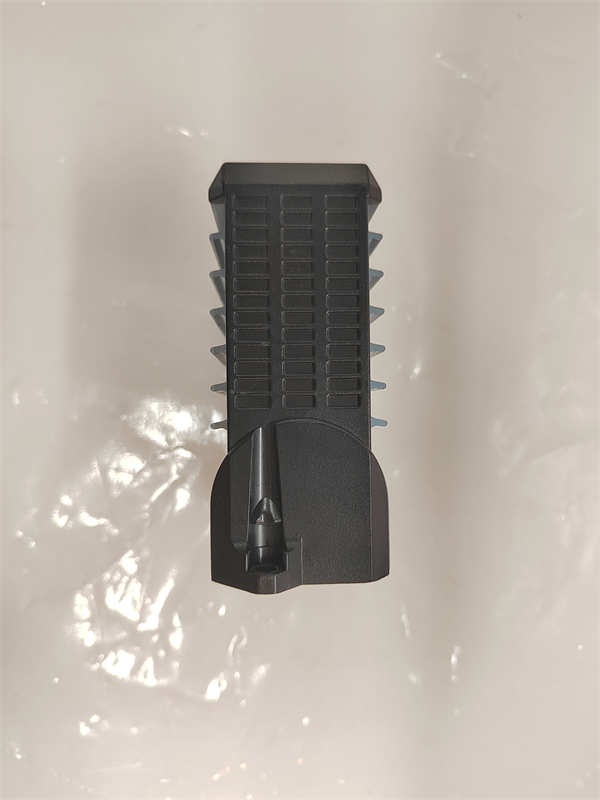
FOXBORO FBM233
Installation and Maintenance
Pre-installation preparation: Verify compatibility with existing CP controllers (e.g., CP60/CP70). Ensure proper grounding of the FBM chassis and fieldbus shields. Confirm segment wiring complies with FF-TR-6.0 topology rules, using approved trunk cables (e.g., Type A). Configure redundancy jumpers if paired modules are used.
Maintenance recommendations: Monitor LAS diagnostics through Control Core software for segment errors. Perform annual terminator resistance checks (100Ω at each end). Use FF device diagnostic alerts for predictive maintenance—replace devices showing “Failure” or “Uncertain” status. When hot-swapping the FOXBORO FBM233, follow sequence: deactivate redundancy pair, extract module, insert replacement, verify auto-synchronization. Keep firmware updated to latest revision for enhanced diagnostics.