
 Email: sales@slxytech.com
 WhatsApp / Wechat:8617062388866
 Phone:+86 17062388866
Description
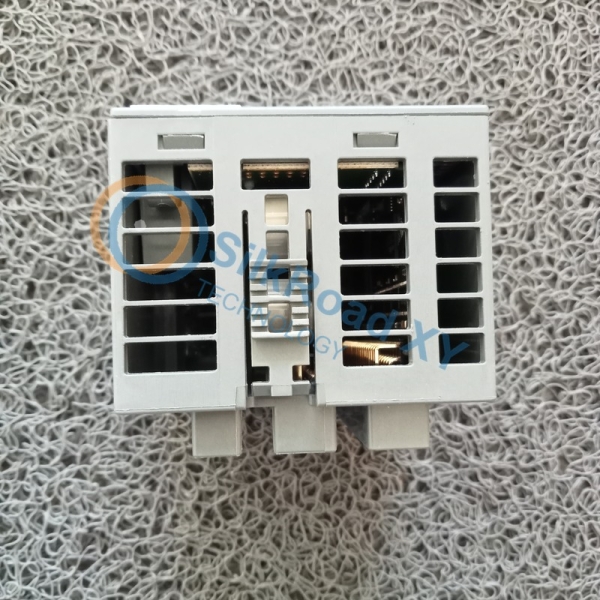
The GE IS200WETBH1BAA is a wet terminal board module specifically engineered for use within General Electric’s Mark VIe turbine control platform—a cornerstone of modern gas, steam, and combined-cycle power generation systems. As part of the SPEEDTRONIC™ family, the GE IS200WETBH1BAA serves as the physical and electrical interface between field devices (such as thermocouples, RTDs, pressure transmitters, and proximity probes) and the Mark VIe’s high-speed I/O processor cards (e.g., TERA, VIBS, or TCQA modules). Unlike “dry” terminal boards that only provide passive connections, this “wet” variant supplies power to field sensors and includes signal conditioning circuitry, fusing, and transient protection—making it essential for reliable data acquisition and actuator control.
Positioned on the rear of the Mark VIe I/O chassis, the GE IS200WETBH1BAA works in tandem with its corresponding front-mounted I/O card to form a complete input/output channel. It enables safe, organized, and serviceable field wiring while maintaining the system’s stringent requirements for noise immunity, redundancy, and fault tolerance. In critical applications such as turbine overspeed protection, combustion monitoring, or vibration analysis, the integrity of signals routed through the GE IS200WETBH1BAA directly impacts operational safety and regulatory compliance. By centralizing power distribution, fuse protection, and signal termination in a modular format, GE ensures rapid troubleshooting, hot-swap capability, and long-term maintainability—key advantages in continuous-operation power plants where unplanned downtime carries significant financial and safety risks.
 Technical Specifications
| Parameter Name | Parameter Value |
|---|---|
| Product Model | IS200WETBH1BAA |
| Manufacturer | General Electric (GE) |
| Product Type | Wet Terminal Board Module (Mark VIe I/O Subsystem) |
| Compatible I/O Cards | TERA, TCQA, VIBS, and other analog/digital I/O modules in Mark VIe |
| Power Supply | +24 VDC (from I/O backplane), fused per channel |
| Terminal Type | Screw-clamp or spring-cage terminals (field wiring side); DIN 41612 backplane connector |
| Number of Channels | Varies by paired I/O card (typically 8–16 channels per board) |
| Signal Types Supported | Thermocouple (J, K, T), RTD (Pt100), 4–20 mA, 0–10 V, contact inputs |
| Isolation | Channel-to-channel and field-to-backplane isolation per IEC 61010 |
| Operating Temperature | 0°C to +60°C (standard industrial range) |
| Mounting | Rear-mounted on Mark VIe I/O chassis (rack-integrated) |
| Certifications | CE, UL, CSA; compliant with GEH-6632 Mark VIe system specifications |
Main Features and Advantages
Robust signal conditioning and power delivery for critical sensors: The GE IS200WETBH1BAA is not merely a wiring hub—it actively powers field instruments like 4–20 mA transmitters and RTDs while providing precision signal conditioning that compensates for lead resistance, cold-junction effects (for thermocouples), and EMI interference. This ensures high-fidelity data reaches the Mark VIe controller, enabling accurate combustion tuning, bearing temperature monitoring, and trip logic execution.
Integrated fuse protection and diagnostics: Each output channel on the GE IS200WETBH1BAA is individually fused, preventing a short circuit in one sensor loop from disabling an entire I/O card. Fuse status is often monitored by the paired I/O module and reported to the Mark VIe HMI, allowing operators to identify field faults without opening panels. This design dramatically reduces mean time to repair (MTTR) during sensor failures.
Hot-swap compatible and modular architecture: Designed for zero-downtime maintenance, the GE IS200WETBH1BAA can be replaced while the Mark VIe system remains powered—provided the associated I/O card supports hot-swap (standard in redundant configurations). Its modular pairing with front I/O cards allows plants to mix analog, digital, and specialty modules (e.g., vibration) within the same rack, optimizing space and scalability.
Engineered for harsh power plant environments: Built to withstand electrical noise from large motors, switchgear transients, and wide ambient temperature swings, the GE IS200WETBH1BAA features conformal-coated PCBs, shielded signal paths, and robust terminal blocks rated for continuous vibration. These attributes ensure decades of reliable service in combined-cycle plants, peaker units, and industrial cogeneration facilities.
Seamless integration with Mark VIe redundancy: In triple-modular redundant (TMR) or dual-redundant Mark VIe systems, the GE IS200WETBH1BAA supports synchronized signal routing across redundant I/O lanes. This is critical for safety-critical functions like overspeed detection, where voting logic depends on three independent, clean signal paths—all terminating through their respective wet terminal boards.
Application Field
The GE IS200WETBH1BAA is predominantly deployed in natural gas-fired power plants utilizing GE Frame 7EA, 9E, 7FA, or 9HA turbines, where it forms an integral part of the Mark VIe control architecture. In these facilities, the GE IS200WETBH1BAA interfaces with hundreds of field devices—from exhaust thermocouples and lube oil pressure switches to axial displacement probes—ensuring the turbine operates within safe mechanical and thermal limits. During startup, synchronization, or load changes, the signals conditioned by the GE IS200WETBH1BAA feed real-time data to the control algorithms that adjust fuel flow, guide vane position, and manage emissions.
Beyond utility-scale generation, the GE IS200WETBH1BAA is also used in industrial cogeneration (cogen) plants at refineries, chemical complexes, and paper mills, where steam turbines drive both electrical generators and process compressors. Here, reliability is paramount: a single failed sensor connection could trigger an unnecessary trip, costing tens of thousands of dollars per hour in lost production. The GE IS200WETBH1BAA’s fused, conditioned, and diagnosable architecture minimizes such risks while simplifying maintenance during planned outages.
In marine propulsion applications—such as LNG carriers powered by GE aeroderivative turbines—the GE IS200WETBH1BAA supports compact, high-reliability control systems that must operate in confined, vibration-prone engine rooms. Even in legacy upgrades, where older Mark V or VI systems are retrofitted to Mark VIe, the GE IS200WETBH1BAA provides a standardized, future-proof I/O interface that aligns with modern cybersecurity and remote monitoring requirements. Across all these domains, the GE IS200WETBH1BAA delivers the signal integrity and serviceability that keep megawatt-scale rotating machinery running safely and efficiently.
Related Products
IS200TSVCH1B: TMR Servo Control Terminal Board – used with servo-valve output cards in Mark VIe
IS200TVIBH1B: Vibration Input Terminal Board – pairs with VIBS I/O cards for Bently Nevada-style probes
IS200TREGH1B: Relay Output Terminal Board – for discrete control of pumps, valves, and alarms
IS200TCQAH1B: Thermocouple Input I/O Card – front module that mates with IS200WETBH1BAA
IS200TERAH1B: RTD/Analog Input I/O Card – commonly paired with IS200WETBH1BAA for temperature monitoring
IC698RM001: Mark VIe Redundant Controller Module – central processing unit that relies on I/O from terminal boards like IS200WETBH1BAA
DS200DVIBG1: Legacy Mark VI Vibration Interface Board – predecessor to Mark VIe vibration solutions
Mark VIe I/O Chassis (e.g., IS200CHASSY): Physical rack that houses IS200WETBH1BAA and its I/O cards
 Installation and Maintenance
Pre-installation preparation: Before installing the GE IS200WETBH1BAA, confirm compatibility with the intended front-mounted I/O card (e.g., TERA or TCQA) and verify that the Mark VIe I/O chassis backplane is de-energized if hot-swap is not enabled. Inspect terminal blocks for damage and ensure all field wiring uses stranded, shielded cable with appropriate gauge for current loads. Ground cable shields at the GE IS200WETBH1BAA end only to prevent ground loops. Label all field wires according to P&ID and I/O lists to avoid cross-connection during commissioning.
Maintenance recommendations: During routine outages, inspect the GE IS200WETBH1BAA for signs of overheating, corrosion, or loose terminals—especially on high-current excitation lines. Test fuse continuity using a multimeter; blown fuses often indicate failing field devices rather than board faults. Clean dust from ventilation slots using low-pressure dry air to maintain thermal performance. If signal drift or noise is observed, verify that the GE IS200WETBH1BAA’s grounding strap to the chassis is secure, as poor grounding compromises signal integrity. Always keep a spare GE IS200WETBH1BAA pre-configured for your specific I/O card to minimize turbine downtime during emergencies.