
 Email: sales@slxytech.com
 WhatsApp / Wechat:8617062388866
 Phone:+86 17062388866
Description
The ABB GFD563A101 (3BHE046836R0101) is a high-density digital output module engineered for use within ABB’s Symphony® Plus (S+) distributed control system (DCS) platform. Designed to deliver precise, reliable switching of discrete control signals in mission-critical industrial environments, this module plays a vital role in automating and safeguarding processes across power generation, oil & gas, chemical processing, and heavy manufacturing sectors. As part of the GFD series of I/O modules, the GFD563A101 provides 32 channels of form A (SPST) dry contact relay outputs, enabling direct control of field devices such as solenoid valves, motor starters, alarm horns, pilot lights, and interlock circuits.
Integrated into ABB’s Process Management (PM) or I/O Subsystem (ISOM) cabinets, the GFD563A101 interfaces seamlessly with redundant controllers like the GCC500 or AC 800M via the S+ backplane, ensuring deterministic response and high availability. Each relay output is individually fused and protected against overcurrent and short-circuit conditions, enhancing system safety and reducing the risk of cascading failures. The module supports hot-swap replacement, allowing maintenance and upgrades without shutting down the entire control system—essential for continuous-operation facilities. With built-in diagnostics, LED status indicators per channel, and native integration with ABB’s Control Builder M engineering suite, the GFD563A101 simplifies configuration, commissioning, and troubleshooting in complex automation architectures.
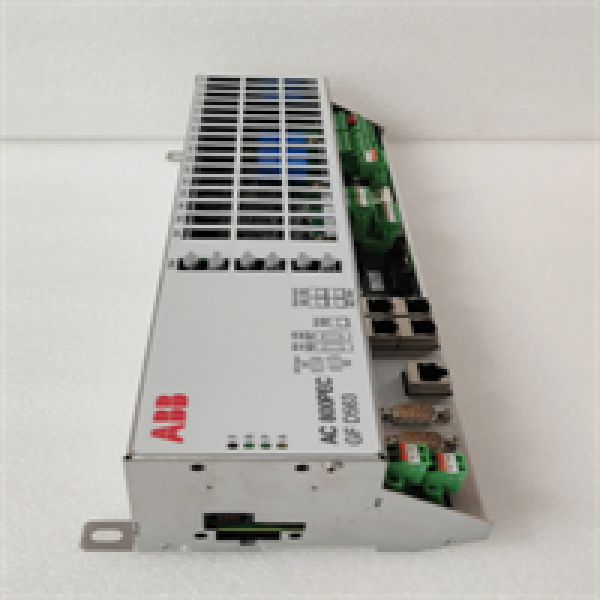
GFD563A101 3BHE046836R0101 ABB
Technical Specifications
| Product Model | GFD563A101 (3BHE046836R0101) |
| Manufacturer | ABB |
| Product Type | Digital Output Module (Relay) |
| Series/Platform | Symphony® Plus (S+) |
| Number of Channels | 32 relay outputs (Form A, SPST) |
| Output Type | Dry contact relay (no internal power) |
| Contact Rating | 2 A @ 30 VDC, 1 A @ 125 VAC/DC, 0.5 A @ 250 VAC |
| Switching Power | Max 60 W resistive / 20 W inductive |
| Isolation Voltage | 1500 VAC (field to backplane) |
| Backplane Interface | S+ I/O Backplane (PM801, ISOM801, etc.) |
| Power Supply | 24 VDC via backplane |
| Current Consumption | ~400 mA (backplane) |
| Operating Temperature | 0°C to +60°C |
| Storage Temperature | -40°C to +85°C |
| Mounting | DIN rail or S+ chassis (e.g., PM801, ISOM801) |
| Protection Rating | IP20 |
| Standards Compliance | IEC 61000 (EMC), IEC 61131, CE, UL |
Main Features and Advantages
The ABB GFD563A101 offers exceptional flexibility and reliability in industrial control applications requiring dry contact switching. Unlike powered digital output modules, its relay-based design allows it to switch a wide range of voltages and load types—including AC and DC circuits—without being tied to a specific field supply voltage. This makes it ideal for interfacing with legacy equipment, safety systems, and third-party devices that operate on different electrical standards.
Each of the 32 relay outputs is individually fused, providing localized protection that isolates faults and prevents damage to the module or connected wiring. The mechanical life of the relays exceeds 10 million operations, ensuring long-term durability even in high-cycle applications such as sequencing logic or batch control. Galvanic isolation between the field side and the control backplane enhances noise immunity and protects sensitive control electronics from surges and ground loops.
The GFD563A101 also features comprehensive diagnostics accessible through Control Builder M and Asset Optimizer, enabling users to monitor relay status, detect coil faults, and receive predictive alerts. Front-panel LEDs provide immediate visual feedback for each channel, simplifying commissioning and field troubleshooting. Its hot-swappable design ensures maximum system uptime during maintenance. Combined with ABB’s robust engineering and global support network, these features make the GFD563A101 a trusted solution for critical control and safety functions.
Application Field
The ABB GFD563A101 is extensively deployed in industries where secure, flexible, and reliable switching of control signals is essential. In thermal and nuclear power plants, it activates turbine trip solenoids, boiler safety valves, and emergency lube oil pumps—critical components in plant protection systems. In oil refineries and petrochemical facilities, the module drives fire & gas shutdown valves, compressor interlocks, and flare stack igniters, where failure to actuate can lead to hazardous situations.
In water treatment and desalination plants, the GFD563A101 controls pump starters, valve actuators, and alarm beacons across multiple process stages. It is also used in industrial HVAC systems, material handling lines, and manufacturing cells to manage machine start/stop sequences and safety interlocks. Due to its dry contact design, the GFD563A101 is particularly valuable in hybrid control systems where it bridges low-voltage control logic with higher-voltage auxiliary circuits. It is commonly found in both greenfield installations and brownfield upgrades, especially when replacing older ABB Advant or Symphony I/O modules with modern, high-density equivalents.
Related Products
ABB GFD562A101: 32-channel digital input module, often paired with the GFD563A101 for complete I/O sets.
ABB GCC500: Primary controller in Symphony Plus that communicates with the GFD563A101 via S+ backplane.
ABB AC 800M: High-end automation controller compatible with the GFD563A101 in integrated DCS configurations.
ABB PM801 Chassis: Process Management cabinet housing the GFD563A101 and other S+ modules.
ABB ISOM801: I/O Subsystem cabinet for remote I/O deployment with the GFD563A101.
ABB GDD111: Analog input module used alongside the GFD563A101 for mixed-signal applications.
ABB Control Builder M: Engineering software for configuring and commissioning the GFD563A101.
ABB Asset Optimizer: Asset management platform for monitoring GFD563A101 health and diagnostics.
ABB GFD213A: 16-channel 24 VDC powered digital output module for lower-density applications.
ABB GDA001: Communication interface module that links S+ I/O to supervisory networks.
GFD563A101 3BHE046836R0101 ABB
Installation and Maintenance
Pre-installation preparation: Before installing the ABB GFD563A101, ensure the control cabinet is clean, well-ventilated, and within the operating temperature range (0–60°C). Insert the module into a compatible S+ chassis (e.g., PM801 or ISOM801), ensuring full engagement with the backplane. Verify that the 24 VDC backplane power is stable and properly grounded. Wire field devices using shielded cables, connecting the shield to the cabinet grounding bar at one end only. Since the outputs are dry contacts, ensure external power supplies for loads are properly fused and isolated. Configure output grouping, alarm settings, and diagnostic parameters in Control Builder M prior to energizing the system.
Maintenance recommendations: Regularly inspect the GFD563A101 for LED status—steady green indicates active relay, off indicates inactive, and flashing may indicate a fault or diagnostic alert. Use Control Builder M or Asset Optimizer to review output history, error logs, and relay cycle counts. Clean dust from ventilation areas during routine cabinet maintenance. When replacing the module, follow hot-swap procedures to avoid process interruption. Always use ESD-safe practices and ensure firmware is up to date through ABB’s official support channels.